

Rail Transit Obstacle Detection System Market Outlook 2026-2032: Safety Automation Reshaping Global Rail Networks
Rail Transit Obstacle Detection System Market Size
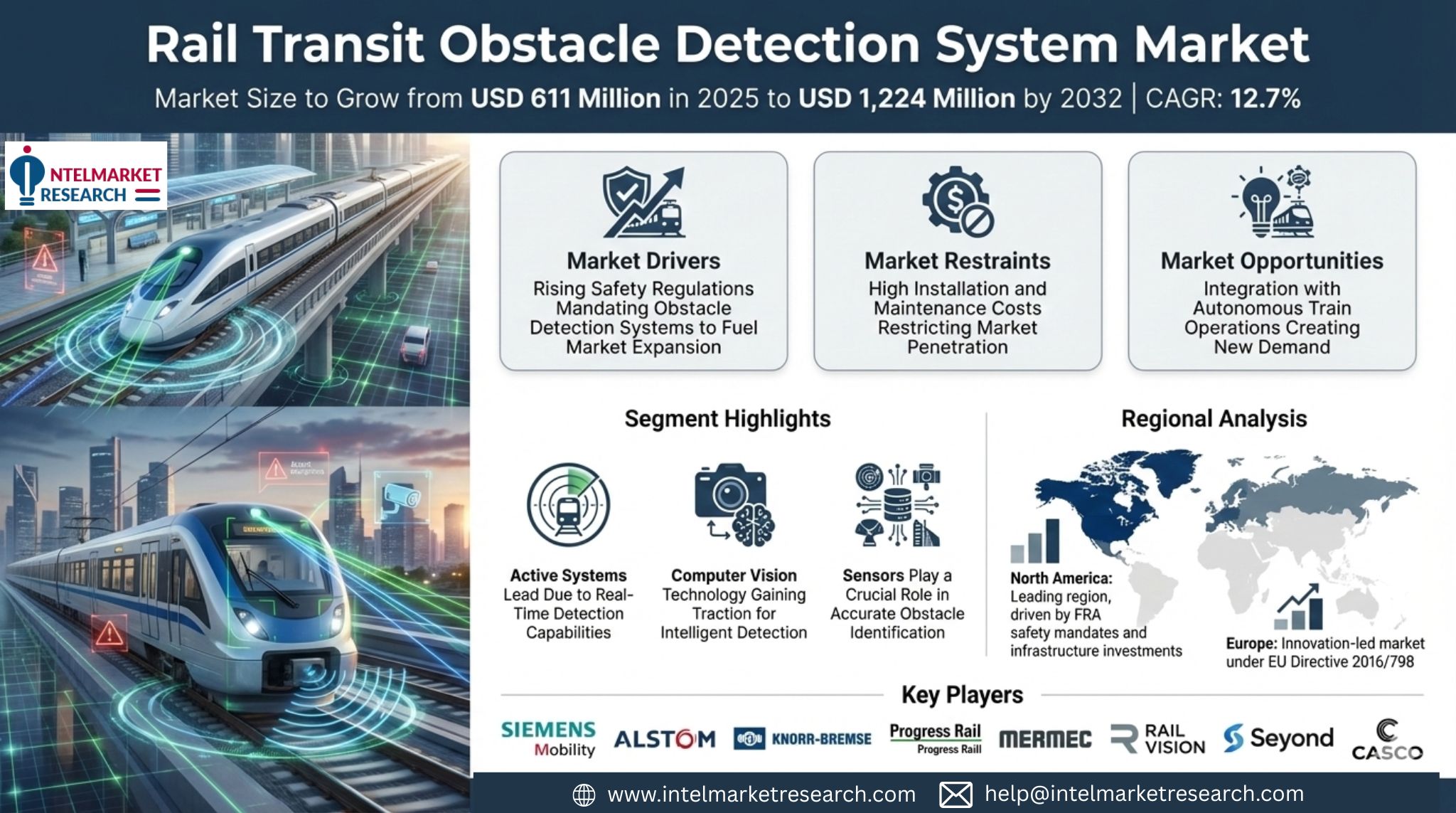
Rail transit obstacle detection system market grows from USD 611M in 2025 to USD 1,224M by 2032, expanding at a strong CAGR of 12.7%.
Rail Transit Obstacle Detection System Market is set to grow from USD 611M in 2025 to USD 1,224M by 2032, reflecting a robust CAGR of 12.7% driven by rail safety modernization.”
PUNE, MAHARASHTRA, INDIA, December 15, 2025 /EINPresswire.com/ -- Rail Transit Obstacle Detection System Market is entering a decisive growth phase as rail operators worldwide accelerate investments in safety automation, intelligent sensing, and collision-prevention technologies. The capacity to identify track intrusions, foreign objects, and unforeseen hazards in real time has become a mission-critical need rather than an optional improvement as train networks expand across metropolitan, intercity, and high-speed corridors. — IntelMarketResearch
Valued at USD 543 Million in 2024, the target market is projected to reach 𝗨𝗦𝗗 𝟭𝟮𝟮𝟰 𝗠𝗶𝗹𝗹𝗶𝗼𝗻 𝗯𝘆 𝟮𝟬𝟯𝟮, and is anticipated to grow 𝗨𝗦𝗗 𝟲𝟭𝟭 𝗠𝗶𝗹𝗹𝗶𝗼𝗻 𝗶𝗻 𝟮𝟬𝟮𝟱 with rising 𝗖𝗔𝗚𝗥 𝗼𝗳 𝟭𝟮.𝟳% during the forecast period. This growth is strongly supported by rising passenger volumes, stricter rail safety regulations, and the global shift toward smart transportation infrastructure.
🔹𝗔 𝗦𝗮𝗺𝗽𝗹𝗲 𝗥𝗲𝗽𝗼𝗿𝘁 𝗜𝘀 𝗔𝘃𝗮𝗶𝗹𝗮𝗯𝗹𝗲 𝗛𝗲𝗿𝗲: https://www.intelmarketresearch.com/download-free-sample/1121/rail-transit-obstacle-detection-system-2025-2032-326
𝐌𝐚𝐣𝐨𝐫 𝐋𝐚𝐭𝐞𝐬𝐭 𝐃𝐞𝐯𝐞𝐥𝐨𝐩𝐦𝐞𝐧𝐭𝐬
𝟭. 𝗔 𝗖𝗼𝗹𝗹𝗮𝗯𝗼𝗿𝗮𝘁𝗶𝗼𝗻 𝗖𝗿𝗲𝗮𝘁𝗲𝘀 𝗔𝗜-𝗯𝗮𝘀𝗲𝗱 𝗢𝗯𝘀𝘁𝗮𝗰𝗹𝗲 𝗗𝗲𝘁𝗲𝗰𝘁𝗶𝗼𝗻 𝗮𝗻𝗱 𝗦𝗲𝗰𝘂𝗿𝗲 𝗥𝗲𝗺𝗼𝘁𝗲 𝗖𝗼𝗻𝘁𝗿𝗼𝗹 𝗳𝗼𝗿 𝗧𝗿𝗮𝗶𝗻 𝗢𝗽𝗲𝗿𝗮𝘁𝗶𝗼𝗻𝘀 𝗶𝗻 𝗥𝗮𝗶𝗹 𝗗𝗲𝗽𝗼𝘁𝘀
In December 2025, for digital train operations in rail depots, the RemODtrAIn (Remote operated train with AI based Obstacle Detection) group, headed by Siemens Mobility, is creating and testing a modular, AI-supported obstacle detection system and a secure remote control system. The project strengthens the beneficial partnership with Deutsche Bahn by building on important findings from earlier initiatives like Automated Train and safe.trAIn.
𝟮. 𝗦𝘄𝗶𝘀𝘀 𝗥𝗮𝗶𝗹 𝗘𝘃𝗮𝗹𝘂𝗮𝘁𝗲𝘀 𝘁𝗵𝗲 𝗦𝗮𝗳𝗲𝘁𝘆 𝗼𝗳 𝘁𝗵𝗲 𝗢𝗯𝘀𝘁𝗮𝗰𝗹𝗲 𝗗𝗲𝘁𝗲𝗰𝘁𝗶𝗼𝗻 𝗦𝘆𝘀𝘁𝗲𝗺
In August 2025, Swiss Federal Railways (SBB) and Siemens Mobility launched a year-long trial of an obstacle detection system aboard a Zurich S-Bahn vehicle. The initiative seeks to enhance operational safety and provide train crews with advanced environmental awareness tools. To monitor tracks and surroundings, the system combines radar, GPS, a thermal camera, and optical sensors. In order to avoid delays and lower the chance of accidents, it can detect fallen branches, debris, or other obstructions early enough. This detection method could become essential for modern rail operations because disruptions frequently occur during storms or in tunnels.
𝟯. 𝗔𝗰𝗰𝗼𝗿𝗱𝗶𝗻𝗴 𝘁𝗼 𝘁𝗵𝗲 𝗽𝗿𝗲𝘃𝗶𝗼𝘂𝘀 𝗮𝗿𝘁𝗶𝗰𝗹𝗲 𝘀𝘁𝘂𝗱𝘆 𝗯𝘆 𝗦𝗶𝗲𝗺𝗲𝗻𝘀, 𝗶𝗻 𝗝𝘂𝗹𝘆 𝟮𝟬𝟮𝟰, 𝗵𝗶𝗴𝗵𝗹𝗶𝗴𝗵𝘁𝘀 𝘁𝗵𝗮𝘁,
An essential component of increasing rail capacity and improving railway performance is automated operation. An obstacle detection system, a crucial technological element for enabling fully automated driving, has been installed and will be tested for the first time during routine everyday operation by Siemens Mobility in collaboration with S-Bahn Berlin. The project’s goal is to thoroughly evaluate the performance of the new obstacle detection system during daily operation in various weather and route conditions.
𝟰. 𝗢𝗯𝘀𝗲𝗿𝘃𝗮𝘁𝗶𝗼𝗻 𝗼𝗳 𝘁𝗵𝗲 𝗦𝗽𝗲𝗰𝗶𝗮𝗹 𝗘𝗻𝘃𝗶𝗿𝗼𝗻𝗺𝗲𝗻𝘁 𝗳𝗼𝗿 𝗠𝗮𝗶𝗻 𝗟𝗶𝗻𝗲𝘀 𝗮𝗻𝗱 𝗠𝗼𝘃𝗶𝗻𝗴 𝗬𝗮𝗿𝗱𝘀
Knorr-Bremse has improved its digitalization and data-based business solutions strategy by acquiring a minority stake in Israeli start-up Rail Vision, one of the rail industry’s leading suppliers of obstacle detection and classification software and sensors. Rail Vision’s unique cognitive sensor fusion technology combines electro optic sensors in the visible and infrared spectrums with artificial intelligence. The system detects objects from a distance of up to two kilometers and classifies them in real time.
𝐓𝐡𝐞 𝐑𝐞𝐚𝐬𝐨𝐧𝐬 𝐑𝐚𝐢𝐥 𝐓𝐫𝐚𝐧𝐬𝐩𝐨𝐫𝐭𝐚𝐭𝐢𝐨𝐧 𝐍𝐞𝐞𝐝𝐬 𝐎𝐛𝐬𝐭𝐚𝐜𝐥𝐞 𝐃𝐞𝐭𝐞𝐜𝐭𝐢𝐨𝐧 𝐒𝐲𝐬𝐭𝐞𝐦𝐬
Rail transit systems operate in dynamic environments where even minor intrusions such as fragments, vehicles, animals, or pedestrians can result in severe operational and safety consequences. Traditional manual monitoring methods are no longer sufficient for modern rail speeds and traffic density.
Today’s obstacle detection systems combine advanced sensors, intelligent analytics, and real-time alert mechanisms to deliver rapid, actionable insights directly to train operators and control centres.
𝗞𝗲𝘆 𝗳𝗮𝗰𝘁𝗼𝗿𝘀 𝗮𝗰𝗰𝗲𝗹𝗲𝗿𝗮𝘁𝗶𝗻𝗴 𝗮𝗱𝗼𝗽𝘁𝗶𝗼𝗻 𝗶𝗻𝗰𝗹𝘂𝗱𝗲:
• Increasing deployment of high-speed and metro rail projects
• Zero-accident safety targets set by national transport authorities
• Rising focus on automated train operation (ATO) and driver-assist technologies
• Cost pressures to reduce accident-related downtime and asset damage
• Integration of rail safety systems with smart city platforms
𝐌𝐚𝐫𝐤𝐞𝐭 𝐒𝐞𝐠𝐦𝐞𝐧𝐭𝐚𝐭𝐢𝐨𝐧 𝐀𝐧𝐚𝐥𝐲𝐬𝐢𝐬
◘ 𝗕𝘆 𝗧𝘆𝗽𝗲:
By type segment includes category like; Active systems (LiDAR-based, radar-based, and vision-based systems), and Passive systems (Infrared sensors and acoustic detection systems)
Active systems dominates the target market growth because they deliver real-time, high accuracy detection across complex and high speed rail environments.
◘ 𝗕𝘆 𝗧𝗲𝗰𝗵𝗻𝗼𝗹𝗼𝗴𝘆:
LiDAR, radar, computer vision, infrared, and other categories are included in the technology segment
Computer vision dominates the target market growth as it is driven by the industry’s shift toward intelligent, data-driven rail safety solutions.
◘ 𝗕𝘆 𝗖𝗼𝗺𝗽𝗼𝗻𝗲𝗻𝘁:
By component segment includes category like; Sensors, Control Units, Alarm Systems, and Software
Sensors dominates the target market growth because they form the core detection layer of rail obstacle detection systems, enabling real-time, continuous monitoring of tracks and surroundings, which is essential for preventing collisions and ensuring safe train operations across high-speed, metro, and freight rail networks.
◘ 𝗕𝘆 𝗗𝗲𝘁𝗲𝗰𝘁𝗶𝗼𝗻 𝗥𝗮𝗻𝗴𝗲:
By detection range segment includes category like; Short-Range (<100m), Medium-Range (100-500m), and Long-Range (>500m)
Long-Range Detection Systems (>500m) dominates the target market growth as they provide early obstacle detection at high train speeds, giving operators and automated braking systems sufficient reaction time to prevent collisions
◘ 𝗕𝘆 𝗔𝗽𝗽𝗹𝗶𝗰𝗮𝘁𝗶𝗼𝗻:
By application segment includes category like; Passenger / Urban Transit, Freight Rail, Metro/Subway, and Light Rail/Trams
Metro/Subway dominates the target market growth because these systems are operated in high-density urban environments with constant interaction between trains, pedestrians, vehicles, and trackside infrastructure.
🔹𝗚𝗲𝘁 𝘁𝗵𝗲 𝗙𝘂𝗹𝗹 𝗦𝘁𝘂𝗱𝘆 𝘄𝗶𝘁𝗵 𝗗𝗲𝘁𝗮𝗶𝗹𝗲𝗱 𝗙𝗼𝗿𝗲𝗰𝗮𝘀𝘁𝘀: https://www.intelmarketresearch.com/rail-transit-obstacle-detection-system-2025-2032-326-1121
𝐑𝐚𝐢𝐥 𝐒𝐚𝐟𝐞𝐭𝐲 𝐒𝐭𝐚𝐧𝐝𝐚𝐫𝐝𝐬 𝐀𝐫𝐞 𝐂𝐡𝐚𝐧𝐠𝐢𝐧𝐠 𝐃𝐮𝐞 𝐭𝐨 𝐓𝐞𝐜𝐡𝐧𝐨𝐥𝐨𝐠𝐢𝐜𝐚𝐥 𝐄𝐯𝐨𝐥𝐮𝐭𝐢𝐨𝐧
Modern rail obstacle detection solutions go beyond simple detection. They are designed to classify threats, assess risk levels, and trigger preventive actions within milliseconds.
Core technological advancements driving market momentum:
• High-resolution LiDAR and radar-based detection
• AI-enabled video analytics for object classification
• Infrared and thermal imaging for low-visibility conditions
• Sensor fusion systems combining multiple detection layers
• Real-time data transmission to centralized traffic control systems
These systems help operators distinguish between harmless track anomalies and critical obstacles, reducing false alarms while improving response accuracy.
𝗟𝗲𝗮𝗱𝗶𝗻𝗴 𝗦𝗼𝗹𝘂𝘁𝗶𝗼𝗻 𝗣𝗿𝗼𝘃𝗶𝗱𝗲𝗿𝘀 𝗮𝗻𝗱 𝘁𝗵𝗲 𝗖𝗼𝗺𝗽𝗲𝘁𝗶𝘁𝗶𝘃𝗲 𝗘𝗻𝘃𝗶𝗿𝗼𝗻𝗺𝗲𝗻𝘁
The aimed market features a mix of established rail technology providers and emerging innovators focused on intelligent sensing and automation. Leading companies are investing in R&D to enhance detection range, weather resilience, and AI-driven threat recognition.
🔸Siemens Mobility (Germany)
🔸Alstom (France)
🔸Knorr-Bremse (Germany)
🔸Progress Rail (U.S.)
🔸Mermec (Italy)
🔸Traffic Control Technology (U.S.)
🔸CASCO (China)
🔸Seyond (China)
🔸Rail Vision (Israel)
🔸L.B. Foster (U.S.)
🔸DITT Hangzhou Digital Technology (China)
🔸Neuvition (Germany)
𝐑𝐞𝐠𝐢𝐨𝐧𝐚𝐥 𝐌𝐚𝐫𝐤𝐞𝐭 𝐈𝐧𝐬𝐢𝐠𝐡𝐭𝐬
⁍ 𝗡𝗼𝗿𝘁𝗵 𝗔𝗺𝗲𝗿𝗶𝗰𝗮:
The region demonstrates strong adoption driven by modernization of freight and passenger rail networks, coupled with increasing focus on automation and collision avoidance technologies.
⁍ 𝗘𝘂𝗿𝗼𝗽𝗲:
Europe remains a leader in rail safety innovation, supported by stringent safety regulations, cross-border rail interoperability requirements, and early adoption of AI-enabled rail systems.
⁍ 𝗔𝘀𝗶𝗮-𝗣𝗮𝗰𝗶𝗳𝗶𝗰:
Asia-Pacific represents the fastest-growing market, fuelled by large-scale metro expansions, high-speed rail development, and government-backed smart mobility initiatives across China, India, and Southeast Asia.
⁍ 𝗠𝗶𝗱𝗱𝗹𝗲 𝗘𝗮𝘀𝘁 & 𝗔𝗳𝗿𝗶𝗰𝗮:
Investments in new rail corridors, urban transit systems, and logistics infrastructure are creating long-term opportunities for obstacle detection technology adoption.
⁍ 𝗦𝗼𝘂𝘁𝗵 𝗔𝗺𝗲𝗿𝗶𝗰𝗮:
Gradual modernization of rail infrastructure and growing urban transit projects are supporting steady market growth.
𝐊𝐞𝐲 𝐀𝐝𝐯𝐚𝐧𝐭𝐚𝐠𝐞𝐬 𝐨𝐟 𝐀𝐜𝐜𝐞𝐬𝐬𝐢𝐧𝐠 𝐭𝐡𝐞 𝐅𝐮𝐥𝐥 𝐌𝐚𝐫𝐤𝐞𝐭 𝐑𝐞𝐩𝐨𝐫𝐭
Purchasing the complete study provides:
1. Detailed market size forecasts through 2032
2. Technology-wise performance benchmarking
3. Competitive landscape with strategic insights
4. Regional demand analysis with country-level data
5. Evaluation of regulatory and safety standards
6. Investment and procurement decision support
7. Risk assessment and opportunity mapping
8. Strategic recommendations for rail operators and technology providers
🔹𝐄𝐱𝐩𝐥𝐨𝐫𝐞 𝐭𝐡𝐞 𝐅𝐮𝐥𝐥 𝐌𝐚𝐫𝐤𝐞𝐭 𝐑𝐞𝐩𝐨𝐫𝐭: https://www.intelmarketresearch.com/rail-transit-obstacle-detection-system-2025-2032-326-1121
🔹𝗗𝗼𝘄𝗻𝗹𝗼𝗮𝗱 𝗼𝘂𝗿 𝗙𝗿𝗲𝗲 𝗦𝗮𝗺𝗽𝗹𝗲 𝗥𝗲𝗽𝗼𝗿𝘁 𝘁𝗼 𝗲𝘅𝗽𝗹𝗼𝗿𝗲 𝗸𝗲𝘆 𝗳𝗶𝗻𝗱𝗶𝗻𝗴𝘀, 𝗺𝗮𝗿𝗸𝗲𝘁 𝘁𝗿𝗲𝗻𝗱𝘀, 𝗮𝗻𝗱 𝗶𝗻-𝗱𝗲𝗽𝘁𝗵 𝗮𝗻𝗮𝗹𝘆𝘀𝗶𝘀: https://www.intelmarketresearch.com/download-free-sample/1121/rail-transit-obstacle-detection-system-2025-2032-326
𝐋𝐨𝐨𝐤𝐢𝐧𝐠 𝐀𝐡𝐞𝐚𝐝: 𝐓𝐡𝐞 𝐅𝐮𝐭𝐮𝐫𝐞 𝐨𝐟 𝐑𝐚𝐢𝐥 𝐎𝐛𝐬𝐭𝐚𝐜𝐥𝐞 𝐃𝐞𝐭𝐞𝐜𝐭𝐢𝐨𝐧 𝐒𝐲𝐬𝐭𝐞𝐦𝐬:
The rail transit obstacle detection system market is set to play a foundational role in the next generation of rail safety and automation. As rail networks evolve toward higher speeds, greater autonomy, and increased passenger density, intelligent detection systems will become indispensable to maintaining reliability and public trust.
Future developments will focus on deeper AI integration, seamless interoperability with signalling systems, and scalable deployment across diverse rail environments. Combined with supportive government policies and infrastructure investment, the market is well-positioned for sustained long-term expansion.
𝗖𝗵𝗲𝗰𝗸 𝗢𝘂𝗿 𝗟𝗮𝘁𝗲𝘀𝘁 𝗥𝗲𝗹𝗮𝘁𝗲𝗱 𝗥𝗲𝗽𝗼𝗿𝘁𝘀:
➢ 𝐑𝐚𝐢𝐥 𝐓𝐫𝐚𝐧𝐬𝐢𝐭 𝐂𝐨𝐧𝐧𝐞𝐜𝐭𝐨𝐫𝐬 𝐌𝐚𝐫𝐤𝐞𝐭: https://www.intelmarketresearch.com/rail-transit-connectors-market-15603
➢ 𝐑𝐚𝐢𝐥 𝐓𝐫𝐚𝐧𝐬𝐢𝐭 𝐓𝐫𝐚𝐜𝐭𝐢𝐨𝐧 𝐌𝐨𝐭𝐨𝐫 𝐌𝐚𝐫𝐤𝐞𝐭: https://www.intelmarketresearch.com/rail-transit-traction-motor-2025-2032-535-1552
➢ 𝐂𝐨𝐦𝐩𝐮𝐭𝐞𝐫 𝐀𝐢𝐝𝐞𝐝 𝐃𝐞𝐭𝐞𝐜𝐭𝐢𝐨𝐧 𝐒𝐲𝐬𝐭𝐞𝐦 𝐌𝐚𝐫𝐤𝐞𝐭: https://www.intelmarketresearch.com/computer-aided-detection-system-market-market-15950
➢ 𝐌𝐢𝐧𝐞 𝐃𝐞𝐭𝐞𝐜𝐭𝐢𝐨𝐧 𝐒𝐲𝐬𝐭𝐞𝐦𝐬 𝐌𝐚𝐫𝐤𝐞𝐭: https://www.intelmarketresearch.com/mine-detection-systems-market-9834
➢ 𝐓𝐫𝐚𝐜𝐞 𝐃𝐞𝐭𝐞𝐜𝐭𝐢𝐨𝐧 𝐒𝐲𝐬𝐭𝐞𝐦𝐬 𝐌𝐚𝐫𝐤𝐞𝐭: https://www.intelmarketresearch.com/trace-detection-systems-market-4734
𝐀𝐛𝐨𝐮𝐭 𝐈𝐧𝐭𝐞𝐥 𝐌𝐚𝐫𝐤𝐞𝐭 𝐑𝐞𝐬𝐞𝐚𝐫𝐜𝐡
Intel Market Research is a leading provider of strategic intelligence, offering actionable insights in robotics, automation, and advanced manufacturing technologies. Our research capabilities include:
• Real-time competitive benchmarking
• Global technology innovation monitoring
• Country-specific regulatory and industry analysis
• Over 500+ technology and manufacturing reports annually
Trusted by Fortune 500 companies, our insights empower decision-makers to drive innovation with confidence.
🌐 𝐖𝐞𝐛𝐬𝐢𝐭𝐞: https://www.intelmarketresearch.com
📞 𝐀𝐬𝐢𝐚-𝐏𝐚𝐜𝐢𝐟𝐢𝐜: +91 9169164321
🔗 𝐋𝐢𝐧𝐤𝐞𝐝𝐈𝐧: https://www.linkedin.com/company/intel-market-research
Rohan
IntelmarketResearch
+91 80879 92013
email us here
Legal Disclaimer:
EIN Presswire provides this news content "as is" without warranty of any kind. We do not accept any responsibility or liability for the accuracy, content, images, videos, licenses, completeness, legality, or reliability of the information contained in this article. If you have any complaints or copyright issues related to this article, kindly contact the author above.
